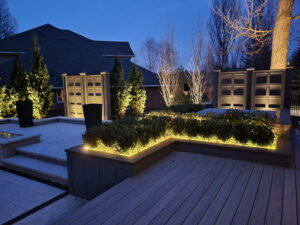
Every new season comes with a list of “around the house” tasks to complete to prepare for it. As fall turns to winter, your landscaping lighting deserves attention as well before snow, ice, and freezing temperatures begin and they become covered and inaccessible.
Outdoor lighting is designed to withstand the elements, but seasonal maintenance and inspection go a long way to identifying small issues before they become bigger ones. Taking a little time to check your system now can also make it easier to keep your property well-lit throughout the shorter winter days.
Here are a few things to check before winter arrives.
Inspect Your Landscape Lighting Fixtures
To start, you should walk around your property and look closely at each fixture, checking for visible damage, loose fixtures, or anything that appears out of place. You should pay particular attention to:
- Wiring and connections: Look for exposed, damaged, or disturbed wiring as well as any visible signs of corrosion or connection problems.
- Lenses: Check for cracks, cloudiness, dirt, or other damage that could affect the quality of the light.
- Fixture bodies: Inspect plastic, metal, or other fixture housings for cracks, damage, or deterioration.
- Operation: Turn the lighting system on and make sure that each fixture is working as expected. A light that is dimmer than the others or not turning on may indicate that there is an issue that needs to be looked into.
- Placement: Make sure that the fixtures are still positioned and aimed properly. Plants grow, landscaping changes, and fixtures can be bumped or shifted throughout the year.
Clean the Fixtures and Lenses
Dirt, dust, leaves, and other debris can build up on outdoor fixtures, and cleaning the fixtures and lenses before winter helps keep the light output clear and allows you to spot any damage that you may not otherwise have noticed. A clean lens can make a big difference in how your landscape lighting looks at night, especially when you’re lighting areas like pathways, trees, gardens, or architectural features.
Remove Leaves and Debris
Fall leaves can collect around landscape lighting fixtures, especially in garden beds and areas that are near mature trees. Clear away leaves, mulch, and other debris from around the fixtures so they don’t affect the light, the fixtures, and their connections. This is also a good time to look for anything that may have shifted or become exposed since you last checked.
Cut Back Plant Overgrowth
Plants that have grown around or in front of your lighting fixtures can block the light and change the way your landscape looks after dark, and because of this, you need to trim them back where necessary to keep fixtures and their intended light paths clear. This is especially important for path lights, uplights, and fixtures illuminating trees or architectural features.
Check Your Timers and Controls
The days become a lot shorter as winter approaches, so it’s a good time to also check your lighting schedule. If your system uses a manual timer, adjust the settings as needed so that your lights come on when you want them to. If your system uses a photocell, astronomical timer, or another automatic control, make sure the control is working as you need it to.
Inspect the Transformer
The transformer is an important part of a low-voltage landscape lighting system, so don’t overlook it during your fall inspection. You should check the transformer enclosure and its visible seals or gaskets for any signs of damage or deterioration. The enclosure should be properly closed, and there should be no obvious openings that could allow water to enter. If you notice a damaged seal, cracked enclosure, exposed wiring, or another electrical concern, you should have the system looked at by a professional instead of attempting to repair it yourself.
Protect Fixtures From Snow Removal
Snow removal is one of the biggest seasonal considerations for landscape lighting. Fixtures located along driveways, walkways, and other areas that will be cleared with a snowblower or shovel can be particularly vulnerable to accidental damage. Before the first snowfall, identify these fixtures and consider marking their locations so that they can be easily seen once the ground is covered. A simple marker can help remind anyone clearing snow where the light fixtures are located, which can then reduce the chance of hitting a fixture or its wiring.
Give Your Lighting a Winter Check Before the Snow Arrives
A few simple maintenance steps in the fall can help your landscape lighting stay reliable throughout the winter. More importantly, catching a damaged fixture, wiring issues, or a control problem early is much easier than finding the problem once everything is covered in snow. If you’re not sure what to look for, or you have a lighting system that needs more than a quick inspection, professional maintenance can take care of the details for you.
Need Landscape Lighting Maintenance or Repairs?
At Moon Glow Lightscapes, we provide all services for outdoor lighting systems. From planning and installation to inspections, cleaning, troubleshooting, and repairs, we can help you keep your outdoor lighting looking and performing its best throughout the year.
Before winter sets in, give your landscape lighting the attention that it needs so your property can continue to shine throughout the darker months.